|
|
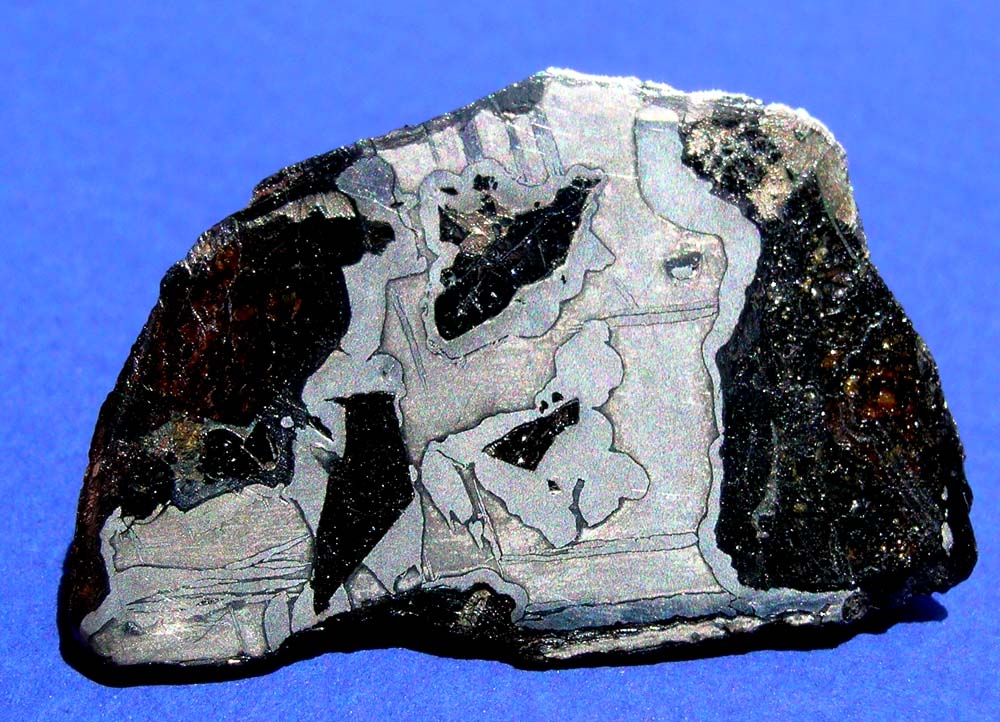
| Ładną piętkę tego pallasytu kupiłem od M.Farmera na targach w Ensisheim'07. Meteoryt nie jest tani, ale jest unikatowy i widziałem, że na targach sprzedawał się nieźle! Oczywiście (!) zapłaciłem dużo mniej niż Mike to wycenia! |
Thumrayt 001 (PMG)
ep 3.8354 g
|
|
| Ładną piętkę tego pallasytu kupiłem od M.Farmera na targach w Ensisheim'07. Meteoryt nie jest tani, ale jest unikatowy i widziałem, że na targach sprzedawał się nieźle! Oczywiście (!) zapłaciłem dużo mniej niż Mike to wycenia! |
|
[MBD] |
|
|
History: The meteorite was found by Michael Farmer in November 2006. An additional 41 pieces within and area of 0.5
miles by 3.5 miles were collected by Michael Farmer and Robert Ward. |
|
| Meteorites Collection 2002–2018 © Jan Woreczko & Wadi |
Page update: 2018-01-18 17:07 |